Introductions
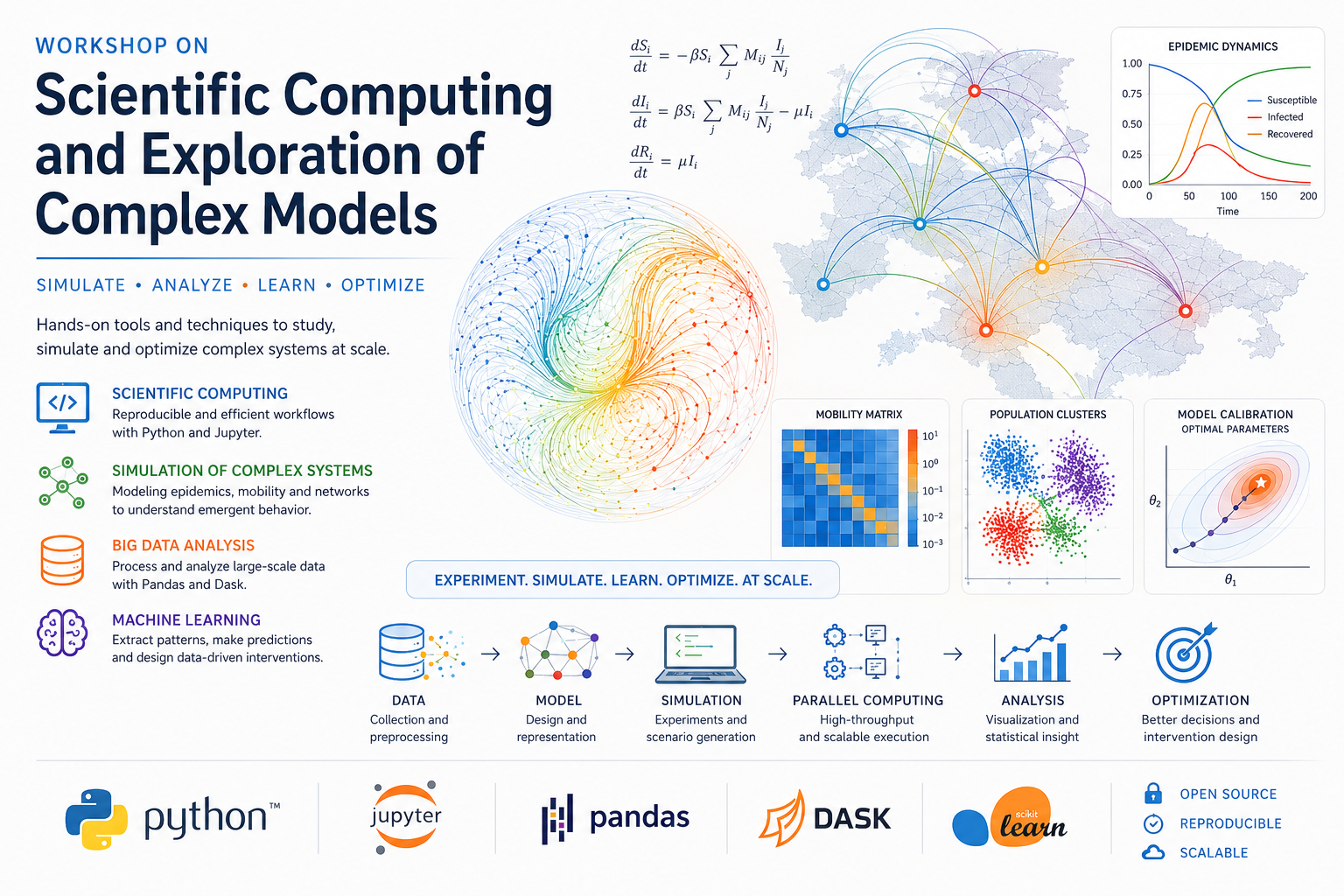
This is the full material dor the intensive hands-on introduction to scientific computing, data analysis, large-scale simulations, and computational model exploration using modern Python tools.
Course Topics
Data Analysis
- Pandas & DataFrames
- Xarray
- Large-scale datasets
- Visualization
- Reproducible workflows
Computational Modeling
- Computer simulations
- Parallel computing
- Model calibration
- Evolutionary algorithms
Course Material
Lecture Slides
Interactive lecture presentations covering the theoretical foundations and computational methods.
Practical Sessions
Hands-on notebooks and exercises using Python and Jupyter.
Tools & Libraries
- Python
- Jupyter
- NumPy
- Pandas
- Xarray
- Dask
- Polars
- Matplotlib
- Scikit-learn
- CMA-ES
- HPC
- Parallel Computing
- Simulation
- Workflow Systems
- Model Exploration
- Reproducibility
Learning Goals
By the end of the course, students will be able to:
- Use modern Python tools for scientific computing.
- Process and analyze scientific datasets efficiently.
- Develop reproducible computational workflows.
- Run and analyze large-scale simulations.
- Apply parallel computing strategies.
- Explore and calibrate computational models.
Audience
The course is intended for advanced undergraduate and graduate students in quantitative disciplines such as:
- Biology
- Physics
- Engineering
- Data Science
- Computational Social Science
Basic Python knowledge and Linux command line usage is strongly recommended, but prior HPC experience is not required.